
THE CONNECTIONS BEHIND YOUR BUSINESS
DV, OV and EV: Identity Checks and Hostname Coverage
Separate certificate identity validation from SAN and wildcard coverage, with honest availability limits.
Certificate validation describes what an issuer checks about the applicant. Certificate coverage describes which service names the certificate can authenticate. These are separate questions; neither replaces application security.
Start here
| Question | What to compare |
|---|---|
| Which hostname must work over HTTPS? | Certificate SAN coverage and client hostname validation |
| Do you need organizational identity in the certificate? | The relevant issuer’s DV/OV/EV validation requirements |
| Are there multiple unrelated hostnames? | Exact SAN/multi-domain coverage |
| Are there changing subdomains? | Wildcard scope and operational requirements |
| Is there a browser warning? | Actual name, validity and trust chain before buying another product |
Validation types
DV verifies control of the domain/name under the applicable rules. OV adds vetted organizational identity. EV follows more detailed entity-identity requirements. These validation processes do not make one certificate’s TLS connection inherently stronger solely because its label is EV.
Read current issuer requirements and application/client behavior. Do not promise a particular browser badge, customer trust score, SEO improvement or fraud prevention based on a validation label.
CA/Browser Forum baseline overview. EV identity-validation overview.
Coverage: exact names, SANs and wildcards
The certificate needs to cover the name the client actually requested. A list of SAN names can cover multiple hosts as issued; a multi-domain product label does not establish the exact names/count included.
For typical DNS-name matching, a wildcard such as *.example.com covers a single leftmost label, such as shop.example.com. It does not by itself cover example.com or a.b.example.com. Confirm actual issued SANs and the client’s validation rules.
TLS service identity and wildcard matching.
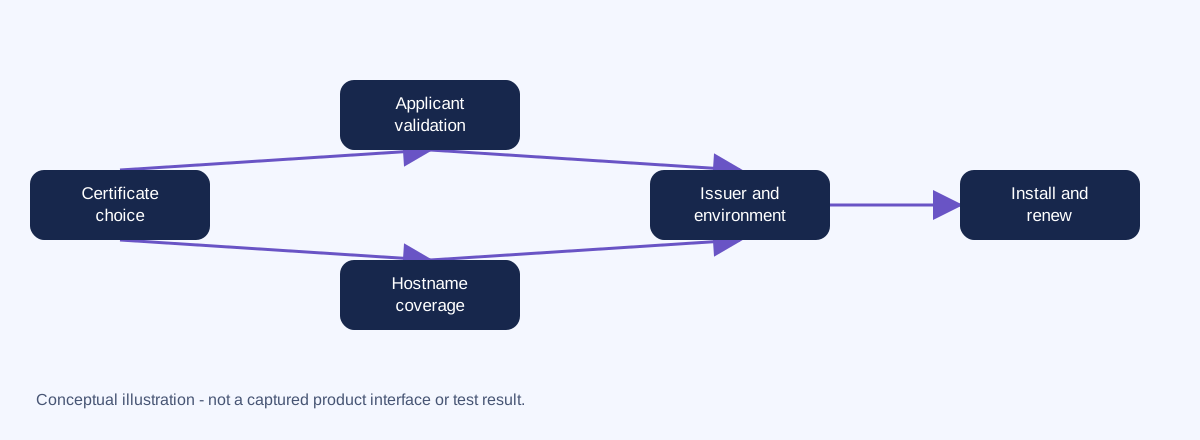
Example: one organization, several names
A business uses example.com, www.example.com and shop.example.com. List all three, then check whether the proposed certificate actually covers them. Choosing OV does not automatically add those names; choosing a wildcard does not automatically cover the apex.
Operation matters after issuance
Match the private key, install the correct chain and verify the served certificate for each needed hostname. Plan renewal ownership and any proxy/origin layers. An installation-service product and an SSL certificate are not interchangeable.
The existing Cubix SSL page compares three DV options. It is a relevant purchase-information destination for DV needs, but this article does not claim that unverified OV/EV plans are available or introduce a new purchase action. Existing OV/EV legacy URLs may consolidate into useful validation/coverage sections only after content and routes are approved.